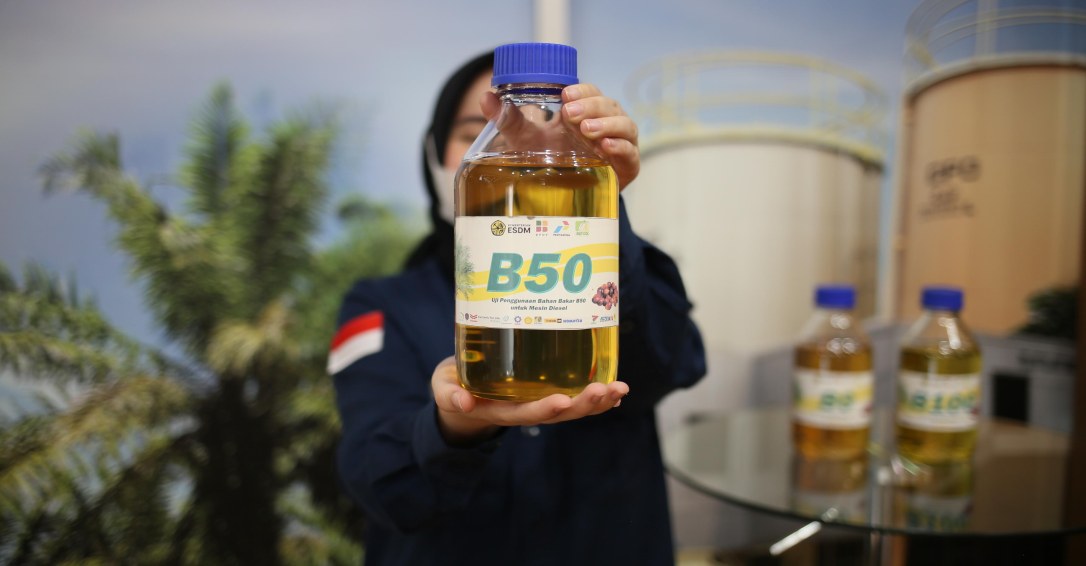
In April 2026, Indonesia's energy ministry said its B50 road tests were going well. B50 is diesel that's half fossil fuel and half palm-based biodiesel (fatty acid methyl ester, or FAME), up from the 40 percent blend already at the pump. Testing started on 9 December 2025 and covered cars, trucks, mining gear, farm machinery, boats, power generators and trains. Malaysia runs its own palm biodiesel programme at much lower blends, so what happens next door matters here too.
What was tested. Toyota Fortuners, Mitsubishi Pajeros and Nissan Terras, a Mercedes-Benz bus, and Hino, Mitsubishi Canter, UD Quester and Mercedes-Benz Axor trucks, all in standard factory condition with no engine changes. Heavy vehicles had done their 40,000 km target by late April, and the lighter ones were aiming for 50,000 km by May. Renewable energy director general Eniya Listiani Dewi said engines and fuel filters were "in good condition and within standards recommended by manufacturers." Toyota Astra said the Fortuner had shown "no fuel-system related problems." In mining, two Komatsu HD785 haul trucks ran nearly 1,000 hours on B40 and B50 side by side. Petromindo reported fuel use about 3.12 percent higher on B50, which the operator called acceptable.
What wasn't tested, or wasn't shown. These were the government's own trials, and we didn't find a published test report. The teardowns that check deposits, filters and injectors were still to come when the results were announced. When B50 launched in July, Energy Minister Bahlil Lahadalia said some vehicles had gone 45,000 km without a filter change, against 10,000 to 20,000 km on B40, and that switching would keep Rp170 trillion (about RM38 billion) in foreign exchange. Both are the minister's figures, and no data came with them.
What's happened since. B50 became mandatory on 1 July 2026. By September about 6,050 service stations, roughly 94 percent of Pertamina's network, were selling it, and the ministry set up a forum with carmakers to share any complaints. The miners' association Perhapi warned that FAME soaks up water, which can wear out injectors early and clog filters faster, and said repair costs rose 17 percent when the industry went from B35 to B40. On 13 November The Jakarta Post reported the government will reassess whether to keep B50 next year, weighing technical readiness, palm oil supply and money.
Verdict. Partly true. The early road tests found no engine problems in standard diesels, and drivers quoted in a ministry release in August said they had no trouble. But the long-term wear checks weren't published, the big filter claim is unproven, and the people running the heaviest diesel gear are still worried about what it costs them.