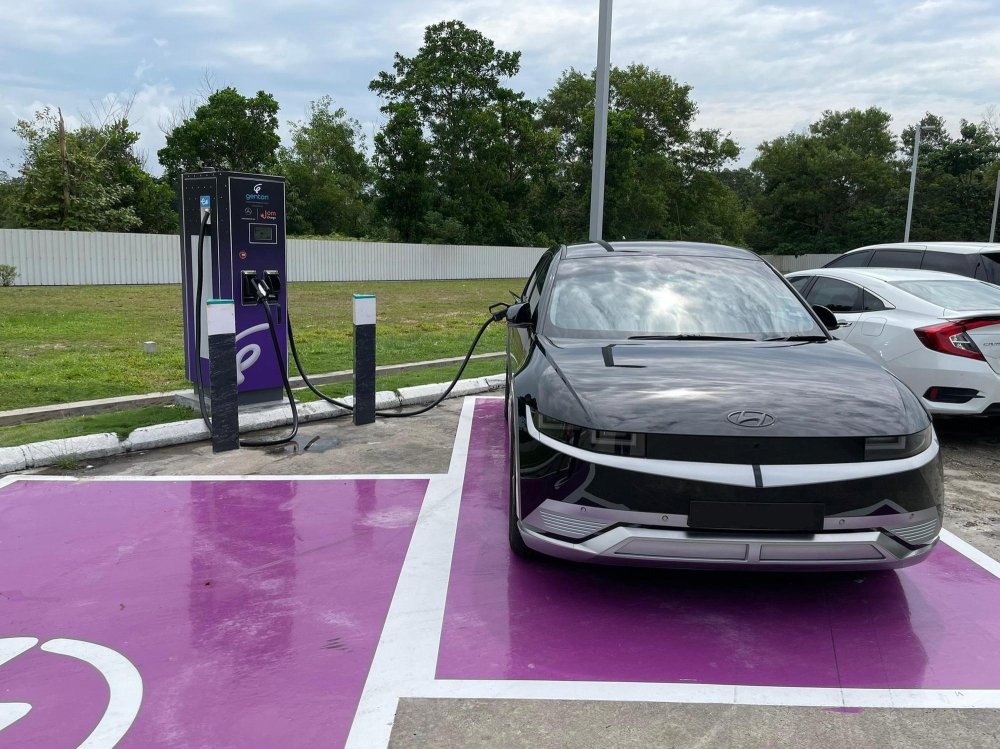
The claim is the government's: Malaysia is building towards 30,000 public EV charging points by 2030. On 16 November 2026, Investment, Trade and Industry Deputy Minister Sim Tze Tzin told the Dewan Rakyat that 7,341 public charging points were in place as at 30 September 2026. That's 4,992 AC chargers and 2,349 DC fast chargers, with 148 of the DC units at highway rest areas, lay-bys and petrol stations. Twenty charge point operators are installing them. Bernama and Malay Mail both reported the same figures that day.
The growth is real. MITI's count was 5,630 at the end of November 2025 and 6,416 at the end of May 2026, as reported by paultan.org at the time. So about 1,700 points went in over ten months, roughly 170 a month, and the pace has picked up a bit since May, to around 230 a month.
Does the maths reach 30,000? Not at that pace. There are about 22,700 points still to go and a bit over four years to do it in. That works out to about 440 a month, close to double what's been managed lately. It's like a workshop booking 230 jobs a month when the plan needs 440: you either add bays or you don't hit the number.
What's holding it up. The minister was blunt about it. Fast chargers need substation capacity, substations are expensive and slow to build, and Tenaga Nasional has to plan for them. He said the government doesn't tell operators where to install, which is why MPs asked about rural towns and highway gaps. An EV levy is one option being studied to fund faster rollout, but no rate, design or date has been given.
Verdict. Partly true. The chargers are going in and the count is checkable. The 2030 target is a goal, not a forecast, and on this year's numbers it needs the rollout to roughly double. Watch the next quarterly count and whether TNB's substation plans get dates and dollars attached.