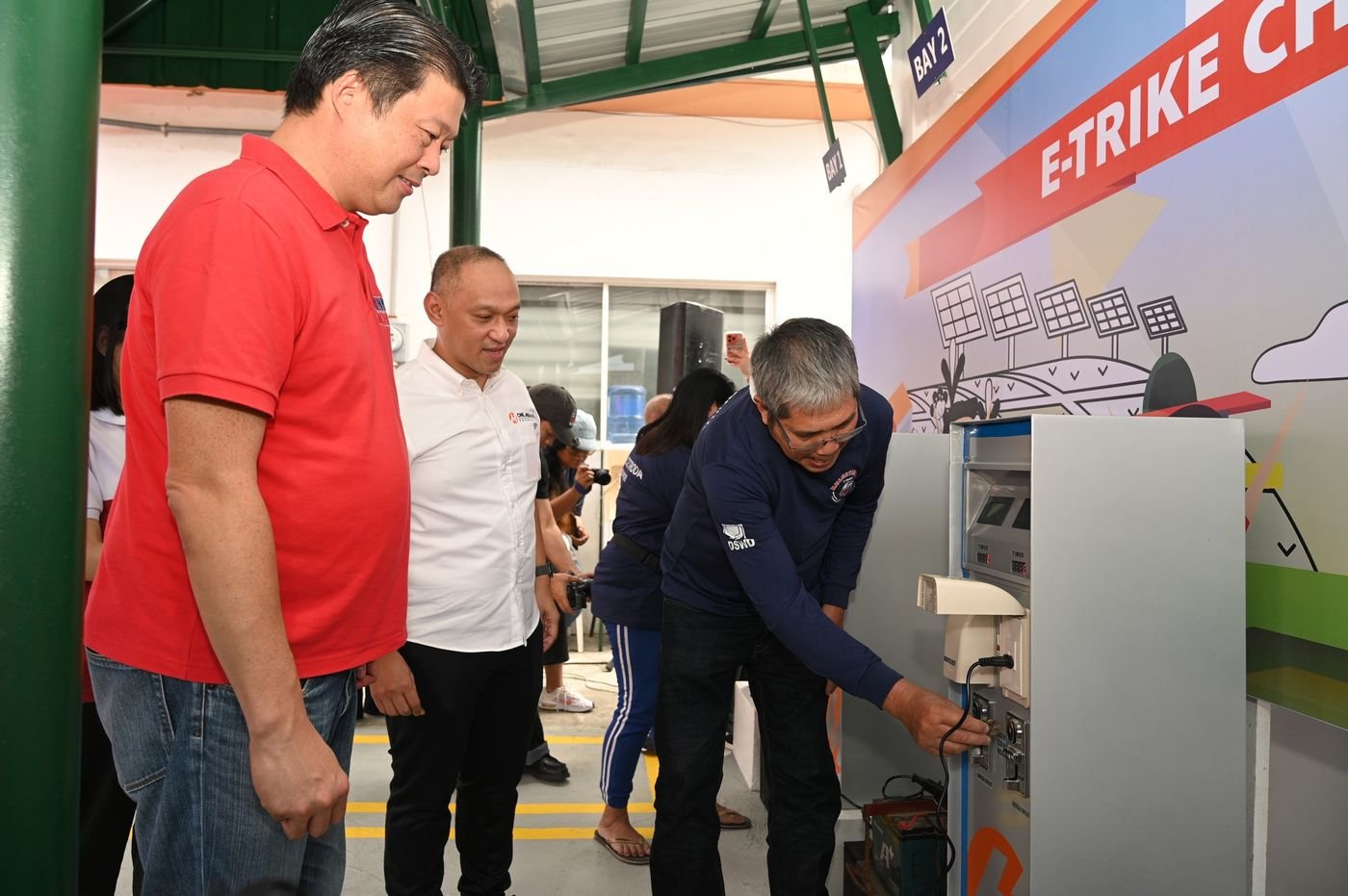
In January 2026, a drivers' group in Barangay Lawang Bato, Valenzuela City, got its own coin-operated charging station for electric trikes. Visor reported the turnover ceremony as 10 January, and the Daily Tribune covered the launch on 5 February, so this one's nearly ten months old. The claim is that the station will cut the income drivers lose to battery swaps, high charging costs and long charging times.
The station is real. It serves the 117 members of the Mulawinan Centro E-Trike Operators and Drivers Association (MULCETRODA). The Tribune reports five dual-outlet, 4.4-kilowatt charging units, so ten outlets, running up to 15 hours a day. The project came through the DSWD's Sustainable Livelihood Program with the One Meralco Foundation, and the chargers were supplied by Movem Electric, Meralco's sustainable mobility arm. Visor says it started with a request from the members and their president, Editho Advincula, and that it's the first station of its kind the foundation has put up. A parts outlet sits alongside it.
The money side is the interesting part. Drivers pay with coins, and after the electricity bill is covered, the net revenue is split equally among the participating drivers. That's a small co-op running its own power point, not a company selling a service. But the sums are tight. Ten outlets for 15 hours is 150 outlet-hours a day, and shared across 117 drivers that's about 1.3 hours each if every outlet runs flat out. Whether that's enough depends on how long a trike battery takes to charge, and neither report says.
What hasn't been tested. Neither report gives a price per charge, a charging time, a PHP cost for the station or any driver income figures. Both lean on words like "expected" and "projected". Solar isn't mentioned in the text either, although the banner behind the chargers has solar panel artwork on it. The two reports also differ slightly, with one saying 117 drivers and the other saying more than 100. We found no update since February, and everything we read traces back to the people who funded and launched it, so none of it has been independently checked.
What to watch. The test is simple. If drivers are spending less time waiting and less money charging than before, the takings will show it, and the group will be able to say so with real numbers. Until then, it's a well-set-up idea with its results still to come.